Fragrance


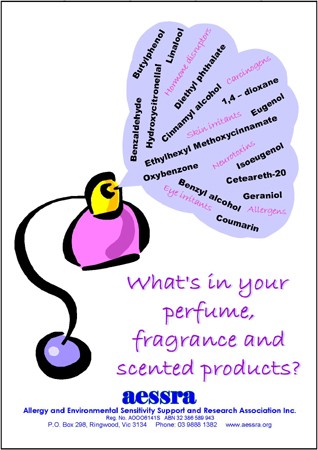
 Most fragrance ingredients are derived from petroleum. Some are known or probable carcinogens (substances that cause cancer), neurotoxins and/or known or suspected hormone disruptors. Many have not had adequate safety testing.

Some people are allergic or sensitive to one or more fragrance ingredients. Some get symptoms when they use a product containing fragrance. Others also get symptoms when someone around them is wearing fragrance or when there is fragrance in a room from a cleaning product, "air freshener" or other source.

Fragrance is a common cause of asthma, rhinitis (hayfever), sinusitis, eczema, dermatitis, migraine and other types of headaches. It can also cause anaphylaxis (a potentially fatal allergic reaction), epileptic seizures, dizziness, fatigue, poor concentration, nausea and other symptoms. (These symptoms can have other causes - see your doctor for medical advice.)

Many fragrance-free products are available, but be careful to avoid products that are labelled "unscented" but include "masking fragrance" as an ingredient. Here is a one-page list of fragrance-free personal care products that are easy to find in Australia:

AESSRA fragrance-free list.pdf AESSRA fragrance-free list.pdf
Size : 46.479 Kb
Type : pdf

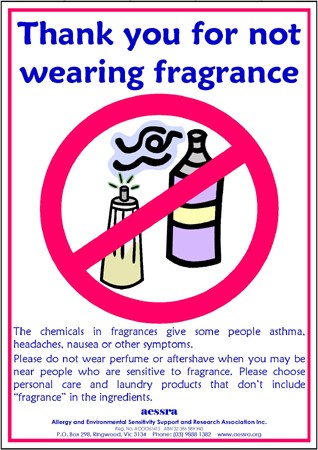
You can download and print pdfs of the following posters: 

AESSRA poster no fragrance.pdf AESSRA poster no fragrance.pdf
Size : 163.309 Kb
Type : pdf
AESSRA poster fragrance ingredients.pdf AESSRA poster fragrance ingredients.pdf
Size : 378.053 Kb
Type : pdf

You can also request copies of the AESSRA brochures: Fragrance and Health and What's in your perfume, fragrance and scented products?  To do this you can tick the boxes on the membership form when you join AESSRA Inc. or use the contact form. 

For more information about fragrance ingredients and fragrance-free policies visit:

Accommodation and Compliance Series: Employees with Fragrance Sensitivity The Job Accommodation Network (a U.S. government website) has suggestions for accommodating employees with fragrance sensitivity, including sample fragrance-free policies: http://askjan.org/media/fragrance.html

Exposure Assessment Information about Professor Anne C. Steinemann's research into chemicals in fragranced consumer products, and resources including fragrance-free policies: http://depts.washington.edu/exposure/

Skin Deep This is a safety guide to personal care products and cosmetics, developed by the Environmental Working Group. You can look up individual ingredients as well as many products: www.cosmeticsdatabase.com

ScentSense Information about fragrance ingredients and health effects, testing, regulations and fragrance sensitivity. http://scentsense.com.au/

The Australian Human Rights Commission's Access to buildings and services: Guidelines and information has suggestions for eliminating or minimising chemical sensitivity reaction and also suggests looking at the Job Accommodation Network information about fragrance sensitivity (see link above): http://www.humanrights.gov.au/disability_rights/buildings/guidelines.htm

Make a Free Website with Yola.